

AERONAUTICAL ENGLISH – FOR AIRCRAFT MAINTENANCE TECHNICIANS
EASA Part-66 requires you to work in English. This programme makes sure you work in it with confidence and precision.
Technical English for the People Who Keep Aircraft Airworthy
Aircraft Maintenance Manuals. Minimum Equipment Lists. Component Maintenance Manuals. Airworthiness Directives.
Every critical document in the maintenance environment is published in English — and your ability to read, interpret, and apply that documentation accurately is central to both airworthiness and safety.
IITA's Aeronautical English programme for aircraft maintenance technicians is built around the technical documentation and communication demands of the EASA Part-66 maintenance environment. It develops the English skills that allow you to work confidently with the full range of maintenance documentation — and to communicate findings, defects, and sign-off requirements with the clarity that the regulatory framework demands.
With an optional placement at a European air base, this programme offers a unique opportunity to gain real-world sector experience and launch a solid career.

✈️ AMM, MEL/CDL, AD, and SB document language
✈️ Defect recording, Tech Log, and certification English
✈️ EASA Part-66 regulatory communication requirements
Lorem Ipsum Dolor Sit
54%
Duis Aute Irure Dolor
80%
Excepteur sint Occaecat
38%
Why Technical English is a Safety-Critical Skill
EASA Part-66 EU Regulation 1321/2014 requires that maintenance personnel demonstrate the ability to read and understand documentation used in the exercise of their licence privileges — which is mainly published in English.
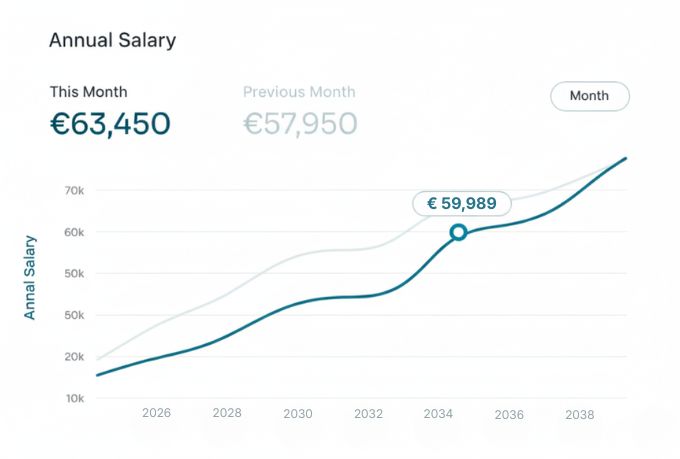
Errors in reading or applying technical documentation are a significant causal factor in maintenance-related incidents. This programme addresses the English skills that protect against those errors:
✈️ AMM navigation and interpretation — Understanding task cards, limits, and sequence requirements in Airbus', Boeing's, and Embraer's documentation formats
✈️ MEL and CDL application — Reading and applying Minimum Equipment List and Configuration Deviation List entries accurately
✈️ Defect recording — Writing precise, unambiguous defect descriptions in the Technical Log
✈️ Airworthiness Directives and Service Bulletins — Interpreting compliance requirements and applicability statements
✈️ Certification language — Signing off correctly under EASA Part-66 authorisation, including CRS language
Loadmasters work across a wide range of aviation operations:
✈️ Air cargo companies – Handling of valuable or dangerous goods (eg, DHL Adviation, FedEx)
✈️ Commercial airlines – Cargo and baggage management (eg, TAP Air Cargo, Luthansa Cargo)
✈️ Military forces – Coordination of military equipment transport, tactical airdrops, and humanitarian airlifts
✈️ Humanitarian organisations — Transport of essential supplies for disaster relief and emergency operations worldwide
The IITA Aeronautical English for Aircraft Maintenance Technicians Programme gives aircraft maintenance technicians the technical English skills needed to read, interpret, and apply maintenance documentation accurately, supporting both airworthiness and safety.
Frequently Asked Questions (FAQs)
Over
100
aviation professionals trained by IITA
EASA Part-66
Aligned to EU Regulation 1321/2014
All Categories
Relevant for Cat A, B1, B2, and C licence holders
The IITA Air Cargo Operations Course teaches you all the essential skills to perform this role safely and efficiently, preparing you for a constantly growing global job market.
Frequently Asked Questions (FAQs)
Why train with IITA?
The programme is relevant for Category A, B1, B2, and C licence holders, with content appropriate to each level of authorisation.
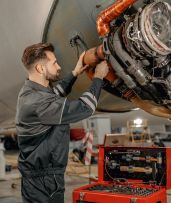
Every element of this programme is drawn from real maintenance documentation and communication scenarios — not generic technical English.

Every skill developed in this programme can be applied directly in your next working day — from reading task cards to writing Tech Log entries.
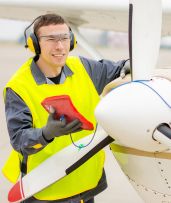
Content is developed in alignment with the documentation and communication requirements of the EASA Part-66 licence framework under EU Regulation 1321/2014.

Every Maintenance Decision Starts with a Document Written in English.
Develop the technical English precision that airworthiness and your EASA licence demand.
TheGem provides custom AI-powered solutions that automate workflows, unlock predictive insights, and create a competitive advantage.
Where can I work?
Frequently Asked Questions (FAQs)
Yes. EASA Part-66 Annex III (EU Regulation 1321/2014) requires that licence holders demonstrate the ability to read, understand, and apply maintenance documentation — which is primarily published in English. This programme directly addresses that requirement.
A minimum of CEFR B1 is recommended. Candidates with lower proficiency should contact us to discuss preparation options.
Yes. The programme covers documentation language relevant to all EASA Part-66 licence categories, with content calibrated to the scope of each licence type.
Duration and scheduling are confirmed at pre-registration. Contact us for current cohort availability.
Click PRE-REGISTER and complete the registration form.
Interested? Reach out.

Bespoke Aviation Training
We design industry-ready programmes
tailored specifically for you.
tailored specifically for you.
