


Skip to main content Scroll Top
The Professionals Who Shape Aviation's Commercial Future
Become part of an elite professional team responsible for managing cargo operations on aircraft worldwide.
Network management sits at the intersection of commercial strategy, operational planning, and economic analysis. For airlines, it means deciding which routes fly, at what frequency, with what aircraft, and at what yield. For airports, it means attracting the right airlines, developing the right routes, and positioning the airport competitively in an increasingly contested market.
IITA's Network Management programme offers two distinct specialist tracks one for airline professionals, one for airport professionals so that the depth of your training matches the precision of your career ambitions.
Both tracks are delivered online, with live sessions by instructors who have worked in commercial aviation and network planning at a professional level.
With an optional placement at a European air base, this programme offers a unique opportunity to gain real-world sector experience and launch a solid career.
Network Management
✈️ Two tracks: Airline Network Management and Airport Traffic Development
✈️ Commercial strategy, data analysis, and operational planning
✈️ No prior network management experience required for the foundation level
The Loadmaster Certificate offers a unique opportunity to gain real-world sector experience and launch a solid career.
✈️ Optional International internship Placements
✈️ Practical training no university degree required
Lorem Ipsum Dolor Sit
54%
Duis Aute Irure Dolor
80%
Excepteur sint Occaecat
38%
Which Track Is Right for You?
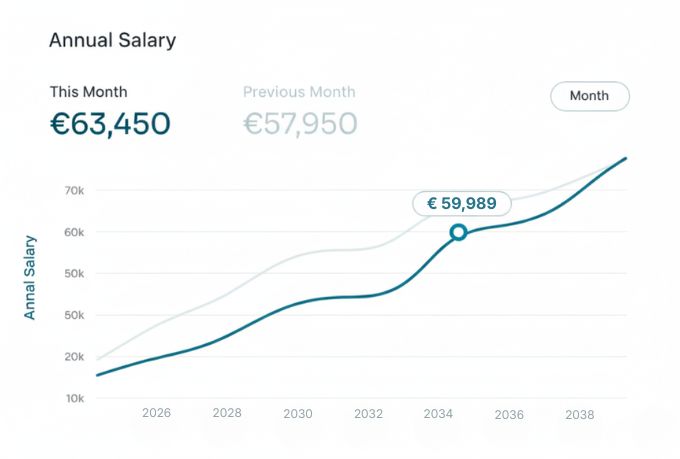
Average salaries between €30,000 and €70,000 per year without a university degree.
Airline Track: The Airline Network Management track covers the commercial and operational decisions that determine which routes an airline operates profitably. Topics include route profitability analysis, fleet planning and optimisation, slot coordination, schedule construction, revenue management principles, and the competitive dynamics of European and international aviation markets.
This track suits candidates working in or aiming for roles in airline commercial, planning, or revenue management departments.
Airport Track: The Airport Traffic Development track covers the strategies airports use to attract, retain, and grow airline services. Topics include air service development, traffic forecasting, airline business case preparation, route incentive structures, catchment area analysis, and the competitive positioning of airports in their regional markets.
This track suits candidates working in or aiming for roles in airport commercial, traffic development, or route development departments.
Loadmasters work across a wide range of aviation operations:
✈️ Air cargo companies Handling of valuable or dangerous goods (eg, DHL Adviation, FedEx)
✈️ Commercial airlines Cargo and baggage management (eg, TAP Air Cargo, Luthansa Cargo)
✈️ Military forces Coordination of military equipment transport, tactical airdrops, and humanitarian airlifts
✈️ Humanitarian organisations Transport of essential supplies for disaster relief and emergency operations worldwide
🌍 Growth prospects:
The demand for qualified air cargo operations specialists continues to accelerate. Global air freight volumes are expanding driven by e-commerce, pharmaceutical logistics, and just-in-time supply chains generating international career opportunities and strong prospects for professional advancement.
The IITA Network Management Programme teaches you all the essential skills to analyse data, plan airline networks, and make strategic decisions, preparing you for a constantly growing global aviation market.
Frequently Asked Questions (FAQs)
Over
100
aviation professionals trained by IITA

100%

Graduate employment rate

2

Specialist tracks — Airline and Airport

The IITA Air Cargo Operations Course teaches you all the essential skills to perform this role safely and efficiently, preparing you for a constantly growing global job market.
Frequently Asked Questions (FAQs)
Why train as a Loadmaster with IITA?

Two Precision Tracks

Rather than a generic commercial aviation overview, IITA's programme offers genuine specialist depth in either the airline or airport perspective — because the roles are genuinely different.
Two Precision Tracks (Airline vs Airport)

Industry-Active Instructors

Network management content is delivered by professionals who have worked in airline planning, commercial teams, or airport route development — not just studied it.
Industry-Active Instructors

Data and Analysis Skills

Both tracks develop the quantitative skills — demand forecasting, revenue modelling, and competitive benchmarking — that employers expect in network management professionals.

Direct Career Relevance

IITA's industry partner network includes airlines and airport operators that actively recruit graduates with demonstrable network management competence.
Direct Career Relevance
The Decisions That Shape Aviation's Routes Start Here.
Join the professionals who understand why airlines fly where they fly — and how airports attract them.
TheGem provides custom AI-powered solutions that automate workflows, unlock predictive insights, and create a competitive advantage.
WHERE CAN I WORK?

Airline Planning & Commercial

Route planning, scheduling, fleet, and commercial departments at European airlines including TAP Air Portugal, Ryanair, Wizz Air, and Lufthansa Group.

Airport Route Development

Traffic development and commercial departments at ANA Aeroportos de Portugal, Aena, ACI Europe members, and regional airports across Europe.

Aviation Consultancy

Strategy and network advisory firms serving airlines and airports across Europe, the Middle East, and internationally.

Aviation Data & Intelligence

Data and analytics organisations serving the aviation commercial sector, including OAG, Cirium, and similar providers.
Frequently Asked Questions (FAQs)

The foundation level of the programme is accessible to candidates without prior network management experience. Some familiarity with how airlines or airports operate is beneficial. Contact us to discuss your background.

Yes. Candidates who wish to develop a broader commercial aviation perspective may take both tracks. Contact us to discuss the most effective way to sequence them.

Duration and scheduling are confirmed at pre-registration. Contact us for current cohort availability and timing.

On the airline side: analysing route profitability, preparing schedule proposals, managing slot portfolios, and modelling demand scenarios. On the airport side: preparing business cases for new routes, meeting with airline commercial teams, analysing catchment data, and developing incentive structures. Both tracks use real-world case studies throughout.

Click the PRE-REGISTER button and complete the short form. Our admissions team will be in touch within 48 hours.

Bespoke Aviation Training
We design industry-ready programmes
tailored specifically for you.